
LEND Outcomes Study
LEND OUTCOMES STUDY GOALS
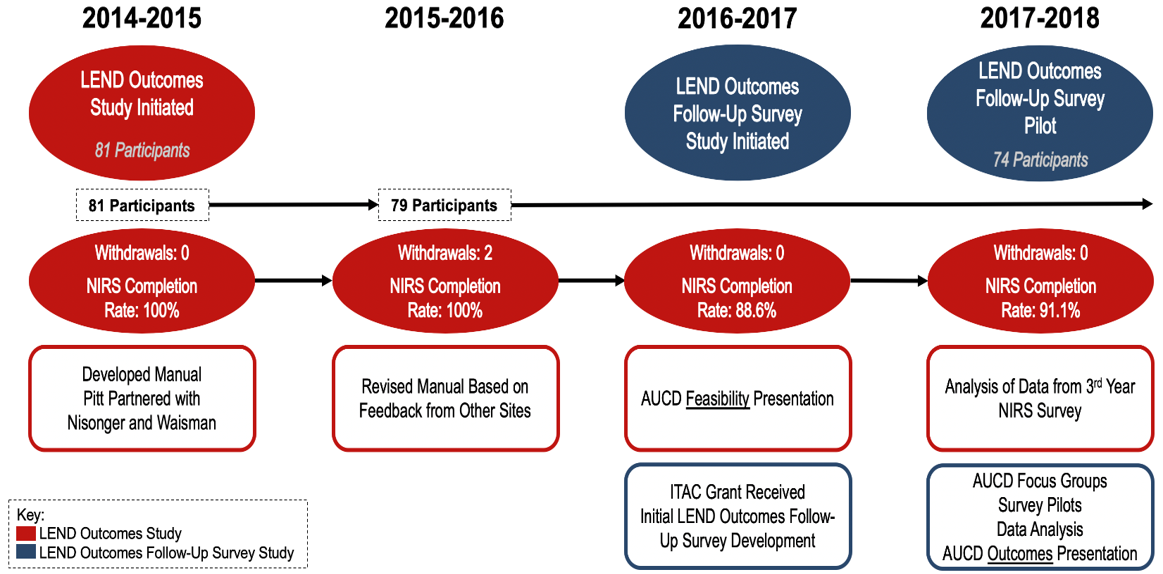
Although evidence from completion of the NIRS Graduate Survey shows that professionals and advocates who have completed LEND training are engaged in interdisciplinary leadership activities aimed at improving the health and wellbeing of individuals with developmental disabilities, the network currently has limited evidence to demonstrate whether LEND graduates are more engaged or successful than peers with the same professional training. We began the LEND Outcomes Study in 2014 to test the feasibility of collecting follow-up data from LEND trainees and a comparison group using a case control design. Over the past four years, we demonstrated that it is feasible to recruit, retain, and collect data from three separate annual cohorts of LEND trainees and comparison peers across three program sites. This presentation represents the pioneering efforts of three LEND programs (Nisonger Center LEND, Wisconsin LEND, LEND of Pittsburgh) to establish a robust measure (LEND Outcomes Follow-Up Survey) that will demonstrate the power of LEND training.
LEND Outcomes Study Timeline
Preliminary Follow-Up Survey Results
OVERVIEW
We Recruited 93.7% of eligible participants.
Survey took, on average, 24:45 to complete
Trainees (T) and Comparison Peers (C) were 88.4% and 96.7% female, respectively
Many trainees and comparison peers either had a family member with a disability (T: 55.8%; C: 43.3%) or themselves had a disability (T: 34.9%; C: 26.7%).
HIGHLIGHTED FINDINGS & IMPLICATIONS
It is highly feasible to collect prospective, longitudinal data on LEND Trainees and comparison peers.
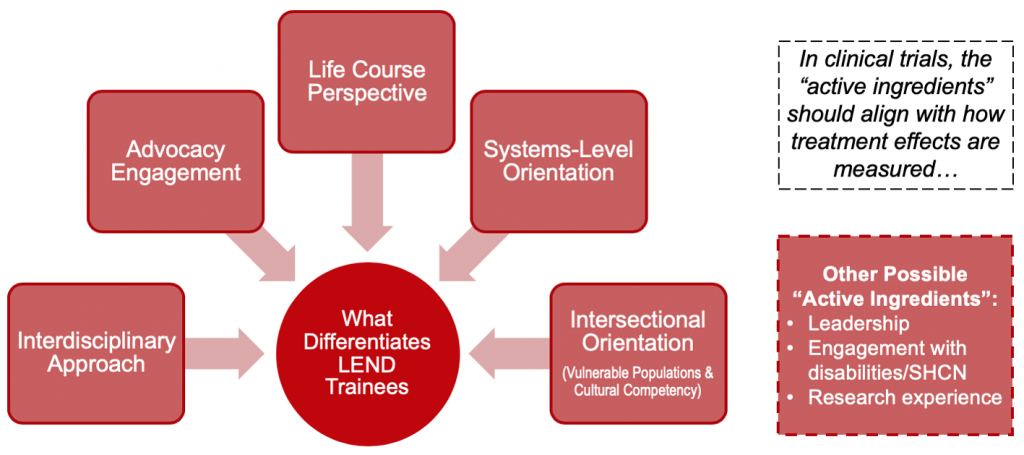
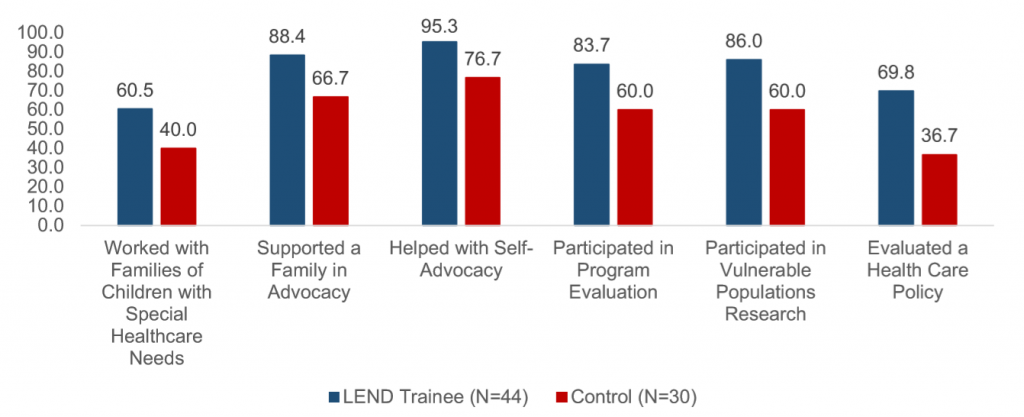
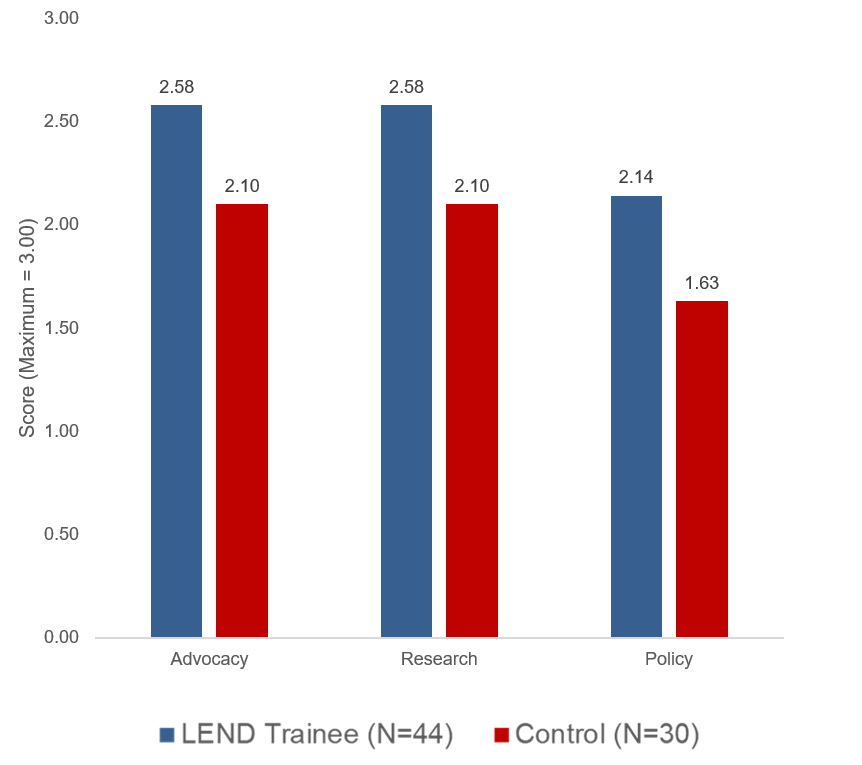
We identified group differences in questions that tapped activities rather than perspectives.
Both trainees and comparison peers believe that they utilize MCH and LEND skills and competencies professionally.
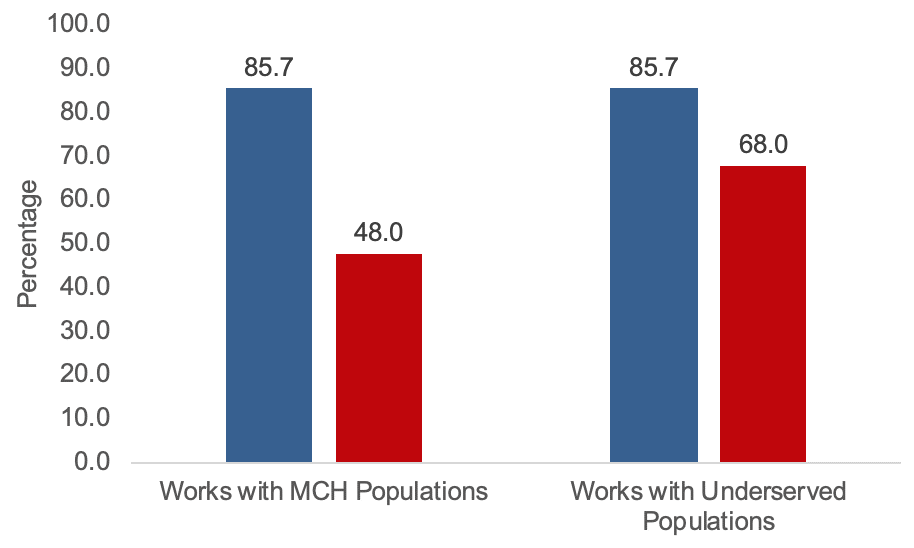
LEND Trainees were more likely than comparison peers to:
Work with people with disabilities
Work with underserved populations
Participate in leadership activities that demonstrated an intersectional orientation and interdisciplinary approach
Be oriented to the systems level
Engage in advocacy
Conduct research
No significant differences in:
Workplace characteristics
Perception of own leadership in the workplace
Agreement with MCH and LEND skills and competencies
Job satisfaction