
(Mis)Representation of Autistic Mortality Data
Citation Context Analysis
Background
You may have heard that “people with autism die 16 years earlier” or have a ’54-year life expectancy” in recent years; these statistics are indeed often reported. They are interpretations of results from a rigorous, landmark study (Hirvikoski et al., 2016) of mortality among autistic people. However, less than 3% of autistic people died during the study’s observation period, which is too small a percentage to draw conclusions about the average age of death for the autistic sample, or about the life expectancy of all autistic people. The widespread statistic of a “54-year life expectancy” for autistic people is a misrepresentation of research findings.
Terms and Concepts
Life expectancy is the average number of years a person can expect to live. It is a “age-specific”, meaning it is based on birth year, and is defined by the age at which about 50% of a specific population have died.
An odds ratio (OR) is a measure of how likely an event is to occur in one group compared to
another. Hirvikoski et al. (2016) calculated odds ratios for death from different causes comparing an autistic group to a non-autistic group
Hirvikoski et al. 2016 Study
This is the largest and most widely cited study on mortality among autistic people. Hirvikoski and colleagues used Swedish population registry data to assess the proportion of autistic people relative to the proportion of people in the general population who died between 1987 and 2009. In total, a relatively small sample of 706 autistic people (2.6%) died during the study period, compared to 24,358 people in the general population (0.91%). The research team also calculated odds ratios of death for all-cause and cause-specific mortality.
Study Purpose
More recent studies of life expectancy among autistic people found less extreme differences in age-of-death. To systematically determine the degree to which mortality findings from Hirvikoski et al. (2016) were represented accurately in the scientific literature, we conducted a citation context analysis.
Citation Context Analysis
A citation context analysis is a specific type of literature review that systematically identifies how important ideas are used by and spread from a source text to other citing works It gathers citeitions of a given work and examines the context of the citations to determine the impact of the work.
Methods
The research team searched six databases to identify articles that cited Hirvikoski et al. (2016), focusing on articles that were full-text, peer-reviewed, and in English. Team members looked at all passages citing Hirvikoski et al., 2016 and then categorized the articles as “correct/accurate”, “incorrect/misleading”, or “irrelevant”. Then, the team used specific statistical tests to assess
relationships between the what was cited and how the article was categorized.’
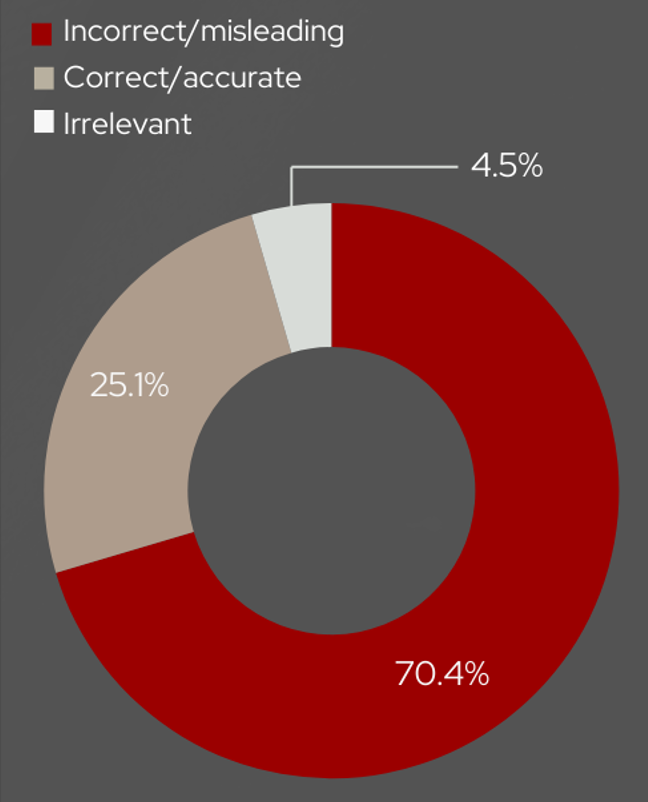
Most Articles Incorrectly Represented findings From Hirvikoski Et Al 2016
| A donut chart depicting the proportions of article categorizations: 70.4% were categorized as incorrect/misleading in red, 25.1% were categorized correct/accurate in tan and 45% were categorized irrelevant in grey |
Major Findings
Citation Trends
In addition to categorizing articles’ citations of Hirvikoski and colleaguesa 2016 findings, the
research team looked at trends in how mortality findings were misrepresented. The most
common way that findings were misrepresented was by calling mortality in autistic people
“premature” (53.7%). While the original authors did title their paper using the term
“Premature mortality,” there is not sufficient evidence to support the conclusion that
autistic people die prematurely.
Another trend centered on findings related to cause of death. Over 17oA of citing authors
represented findings as being about suicidality, rather than death by suicide. This is an
important distinction: suicidality includes suicidal ideation, plans, and attempts that do not
result in death. Hirvikoski et at. (2016) looked specifically at deaths by suicide. Some citing
authors (8.4%) reported that Hirvikoski et al. (2016) found that suicide was the leading
cause of death among autistic people, but this was incorrect as well: circulatory system
diseases were actually the leading cause of death in the sample.
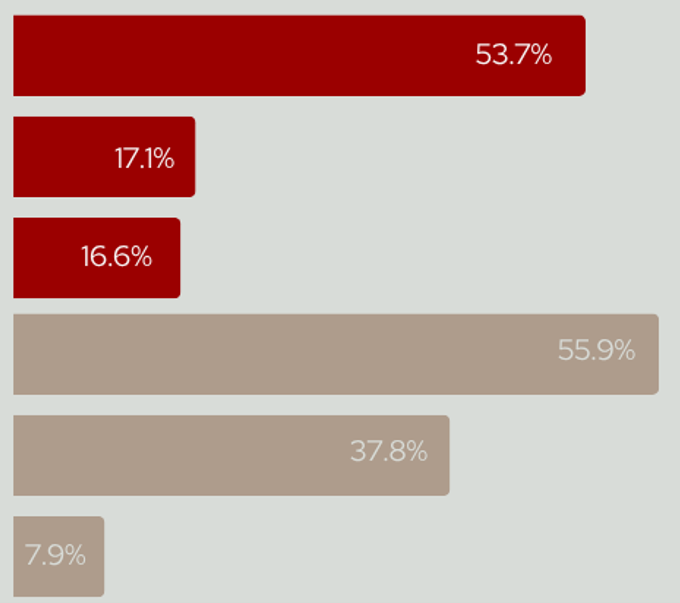
Among 356 articles with incorrect/misleading representations, 53.7% used the term “premature mortality” incorrectly, 17.1% confused suicidality with death by suicide, and 16.6o/o made unsupported conclusions about life expectancy of autistic people
Among 127 articles with correct/accurate representations, 55.9% cited the higher suicide mortality rate, 37.8o/o cited the higher all-cause mortality rate, and 7.9% cited broad references to health inequities experienced by autistic people.
Conclusions
Our findings indicate widespread misrepresentation of findings from Hirvikoski et al., 2016. This
shows just how critically important it is to share research findings accurately.
This misrepresentation has been spread by social media and other reports making unsupported claims of premature mortality and reduced life expectancy. These inaccuracies have potential consequences for autistic people, including psychological distress, altered family and retirement planning, insurance denials, and health disparities.
Implications
Hirvikoski et al. (2016) is a highly technical article that uses specific statistical language. This language can easily be misinterpreted by anyone, scientist or layperson, so it’s crucial to keep that in mind. This is especially important because the autistic population has historically experienced significant harm because of scientific misinformation. Future studies examining findings from other mortality studies are needed to provide a more holistic picture of autism mortality research.
Study Citation
Hand BN, Nikahd M, Wolf BJ, Hyer JM, Longo A, Gilmore D, Bishop L. Citation Context Analysis of Autism Mortality and Suicide Findings From Hirvikoski’s Landmark Study. JAMA Netw Open. 2025 Feb 3;8(2):e2461953. https://jamanetwork.com/journals/jamanetworkopen/fullarticle/2830153